
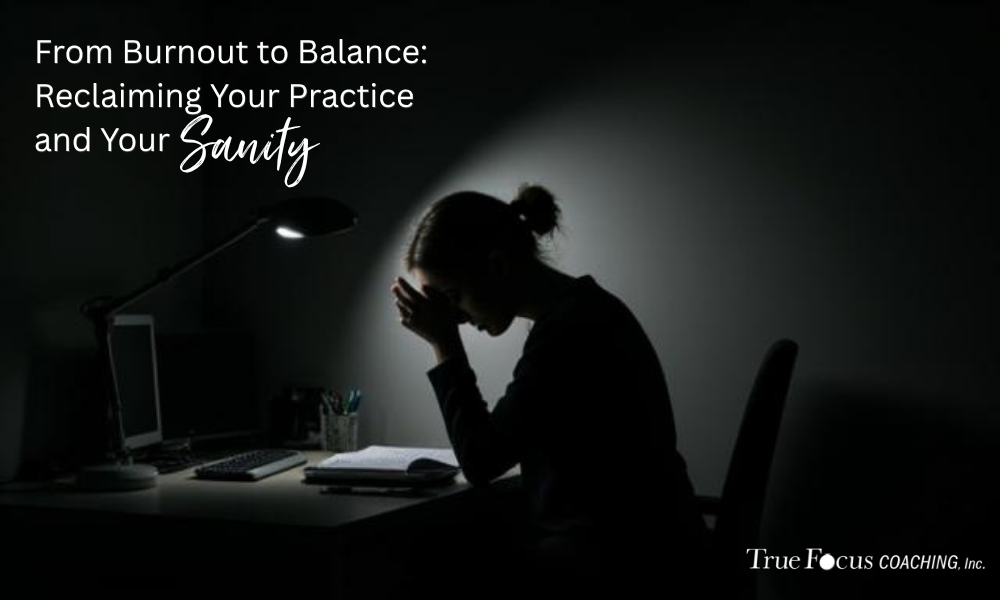
How Can Lawyers Prevent Burnout Without Sacrificing Their Practice?
If it feels like you’ve been running hot for far too long and you’re almost out of oxygen, let me show you how to rebalance your practice and personal life so you can breathe. As a time management consultant, I regularly work with lawyers to create systems to better manage their projects and tasks and set realistic boundaries around work.
Does it feel like you are on a never-ending treadmill of long days, yet you can’t seem to accomplish as much as you think you should, and end up feeling ineffective? When you do have time outside of the office, do you feel that you haven’t mentally set aside work to truly focus on family and friends?
When you’re buried under chronic work stress, burnout is a serious threat. Solo legal practitioners can be especially at risk because they take on running a business on top of their legal responsibilities. High workload, long hours, demanding clients and colleagues, lack of control, a competitive work environment, and time scarcity are all elements of solo practice and potential kindling for burnout.
Because burnout is a result of chronic work stress, it builds over time. It can easily creep up on you like a room slowly filling with smoke. At first, you adjust. Over time, your vision clouds and your thinking slows. Finally, breathing gets harder. Often, what initially feels like manageable bouts of stress gradually becomes a three-alarm fire with these hallmarks: (1) mental or physical exhaustion; (2) cynicism, a sense of detachment from work or negative feelings related to your job or coworkers; and (3) feelings of ineffectiveness, as if you are not making a difference.
Tricks for Identifying Potential Burnout Early
#1: Pay Attention to What Stress Feels Like for You
Because burnout often creeps up over time and is stress-related, ask yourself how you tend to deal with stress and how you know if you are under stress. Learning what your personal signs of stress are before they become a full-blown burnout firestorm or a health issue is key.
For instance, what feelings and emotions do you experience under stress: headaches, trouble concentrating, irritability? Or are you short-tempered? Other common signs include fatigue, muscle tension, problems with sleep, digestive issues, and difficulty with memory and focus. Get familiar with your personal stress cues and take corrective
steps early. You want to smell the smoke before a bonfire begins.
#2: Notice When Stress Starts to Increase – Even a Little – Then Get Strategic
Once you understand what your stress looks like, pay attention to the signs that it’s increasing. Remember, smoke builds slowly at first. Next, try to identify the cause. You are now ready to strategically implement tactics to manage that specific issue.
For example, if one of your signs of stress is difficulty sleeping and you notice that you are up more nights than usual during a particular week, ask yourself, “What has changed that is causing me to feel more stress?” Be as specific as you can. Is it a new client, an interchange with a colleague, money concerns, or worry that things are falling through the cracks? Remember, even just letting a podcast or the news eat into your sleep can be a smoke signal. Next, find a strategy to directly impact the source of your stress. For instance, if you are feeling like things are falling through the cracks, what are they specifically? Make a list. Is it case-related details, looming deadlines, bookkeeping, billing, business development, or something else? Specific issues are easier to correct than vague feelings. You want to know where the smoke is coming from so you can douse the fire.
Once you identify the specific source of stress, get strategic. Take a big-picture look at how your day-to-day workflow goes and what process you can put in place to stop that thing from falling through the cracks. One client I worked with found that she often woke up at night worrying about when she was going to write estate
plans. As we examined why this was keeping her up, she realized that she needed to plan time immediately after a meeting with a client to outline the new work. Included in her updated process was putting all the details in one place and planning when to do the work. Once she incorporated that strategy into her day-to-day routine, she found that she slept better because she knew when she was going to get the work done.
#3: Build a Practice That Focuses on Your Impact Rather Than Constant Availability
Research shows that lawyers who have control over their work and who value skill, professionalism, and collaboration above productivity and availability report less stress and have less burnout than their colleagues. As a solo practitioner, you have a unique ability to control your work environment and focus on your professionalism
and skills as a lawyer, not just work all the time. The key is to keep asking yourself why you care about what you are doing and systematically review if you are doing that each day. It is easy to get focused on long workdays and forget why you are practicing law in the first place. In addition to hours billed or matters retained, make sure you lean into what is meaningful to you about the work you get to do as a lawyer.
A Strategy to Burnout-Proof Your Schedule
#1: Restructure Your Schedule to Realistically Include All the Things You Need to Do
Because life in solo practice can be overwhelming, it is important to get clear about your business obligations and the things you need to do outside of work. Take the time to put together a weekly plan that accounts for all the things you need to do. You need a schedule that is flexible enough to adapt to the inevitable changes, but clear on how you will fit everything in—professionally, of course, but don’t forget the personal. Make sure you don’t over-schedule your week. Leave some flexibility each day so that the plan is realistic and not overpacked. I call this a flexible template for your week.
#2: Understand That Longer Hours and Constant Availability Are Not the Answer
Research on lawyer productivity shows that longer days don’t always mean more billable hours or getting more done. Long workdays often mean fatigue, leading to more mistakes and time wasted spinning your wheels with little to show for it. The smoke gets in the way.
Indeed, studies of lawyer work patterns show that attorneys frequently work significantly more hours than they bill due to inefficient workflows and errors in time capture. Profitability in law firms is driven less by hours worked and more by productivity, leverage, and operational efficiency. More efficient systems also improve the quality and
responsiveness of legal services and can significantly reduce time spent on routine administrative tasks. All of this means that you can get more done in less time if you are rested and create an efficient workflow. This will allow you to focus on high-value work that you feel good about and enjoy. You are clearing the smoke and adding
oxygen to your day.
As a productivity and time management coach for lawyers, I often see attorneys in solo practice feeling like they have to be everything to everyone, with a day that is constantly broken up by interruptions from clients, colleagues, and staff. This leads to lots of time lost shifting from one activity to another, which can be a challenging habit to break. You might start by scheduling one to three hours each workday where you will focus on the important work that only you can do. Block these times from being scheduled with other activities, turn off notifications, and be unavailable to anyone but yourself. You will get more done in less time without constantly shifting from one activity to another.
#3: Know When You Are Not Working
If this feels like a lot to think about, just start with when you will begin and end your workday. One of the leading factors related to burnout is long workdays. If you don’t know when your workday is going to start and end, you’re more likely to spill over into your downtime. The lawyers I work with find this a pivotal first step. Focus on how to
shut down work at the end of the day, and practice that routine. This shift can make a big difference in having the critical recovery time that you need to bring your best self to work and to the rest of your life.
Another critical piece is to schedule downtime in your week, where you know you can do something relaxing that is not work-related and that allows you to recover. For many people, this ends up being a weekend day, where they turn off work for 24 hours. If that feels like too big a shift for you, start with a consistent afternoon or evening and slowly extend to a full 24 hours.
If you think that sounds impossible, you are not alone. I often hear, “What do you mean, stop working… I work all the time??” I get that. (Remember, I’m also a solo practitioner.)
#4: Discover What Recharges You
Recovery time is critical to burnout prevention. You need to be able to turn off work and rest and refuel. Top performers in many fields take regular recovery days. Giving yourself a clear end to your day and at least a full day off each week is critical for top performance and avoiding burnout. Add activities into your week that allow you to
recharge. Try a novel, a cup of your favorite tea, physical activity, or a relaxing hobby. The key is to give your brain a break from work so it can be more focused and creative when you do work. It sounds counterintuitive, but time and again, I’ve seen that shorter hours lead to getting more done.
#5: Focus on What Only You Can Do and Delegate the Rest to Trusted Resources
As you continue to build out your flexible template, continue to focus on the work that only you can do and that you enjoy doing. At the same time, determine which tasks someone else can do. You might start by asking yourself what needs to be done in your business that does not require your legal license. Use this list to start delegating or creating more efficient systems to handle these activities.
I often hear from attorneys learning to delegate that the time and energy to train someone feels overwhelming, and that they don’t trust others to do the work properly. If this feels like you, start by delegating just a few things at a time. Often, hiring a part-time administrator and asking them what they think they can take off your plate, and the best process by which to do so, can free you from having to figure out the training plan.
#6: Plan for Unexpected Demands
A common issue in many law practices is that unexpected things crop up in the workday that need to be handled. Whether it’s a demanding client, a surprise from opposing counsel, or a family emergency, surprises happen—so plan for them. Notice what the surprise is, who is involved, when it tends to happen, and how long it takes for you to handle it. Then, go back to your flexible template and add time each day for these wildcards. You’re creating a buffer in your day to handle the extras when they appear. If no surprises happen, then you have extra time to focus on the important work that only you can do. You’ll find the time to create open space for these extras by creating more efficient systems and avoiding distractions.
#7: Find Joy in Your Work Again
As a solo practitioner, you have control over how you align your business with your values and personal goals. Moving away from longer work hours and focusing on doing work that feels meaningful, fulfilling, and important to you is also critical to avoiding burnout and recharging your energy and creativity. Start flourishing by connecting
with the parts of your work that feel meaningful, those that allow you a sense of a job well done and connect you positively to others. My clients find that, at the end of each work week, creating a list of things that went well over the last seven days encourages them to reflect on the work they have accomplished, what they feel good about doing, and who they’ve done it with and for. Pause and notice the meaningful moments in your workday. Explore which parts of your work bring you joy and then purposefully engage in more of those activities.
Putting Out the Fire
By creating more room for meaningful work, building collaborations that support you, and scheduling a work/life blend that enables you to succeed, you will not only reclaim your practice and your sanity but also learn to thrive. And you’ll douse the fire, clear the smoke, and scatter the embers of burnout so they are no longer a threat.
©2026. Originally published in GPSolo: Volume 43, Number 4, July/Aug 2026 by the American Bar Association. Reproduced with permission. All rights reserved. This information or any portion thereof may not be copied or disseminated in any form or by any means or stored in an electronic database or retrieval system without the express written consent of the American Bar Association or the copyright holder.